- Published on
-
-
- Published on
 As the school year draws to a close, we have a great opportunity to gather student feedback and reflect on the past year's successes and areas for improvement.
Check out these five engaging strategies for teachers to collect important feedback from their students while fostering a culture of ownership as the year comes to an end.- Emoji Reflections: Kick off each final class with a reflective emoji check-in. Ask students to choose emojis that represent their overall school year experience, including aspects like their understanding of the material, engagement level, and emotional state. This visual feedback sets a positive tone for reflection and encourages students to express themselves succinctly.
- Memorable Exit Tickets: Wrap up the last few classes with exit tickets that prompt students to reflect on the entire school year. Instead of focusing solely on content comprehension, ask questions that encourage students to reminisce about their favorite moments, challenges they overcame, and lessons they learned. This reflective exercise helps students recognize their growth and achievements throughout the year.
- Year-End Student-Led Reviews: Shift the spotlight onto students by hosting end-of-year student-led reviews. Allow students to showcase their work, highlight their progress, and reflect on their personal learning journeys. By guiding their own assessments, students develop a deeper sense of responsibility for their academic growth and are empowered to set goals for future success.
- Interactive Farewell Surveys: Use digital polling platforms, like https://ahaslides.com/ to gather feedback on the overall school year experience. Invite students to share their opinions on various aspects of their learning environment, from teaching methods to classroom dynamics.
- Celebratory Gallery Walks: Transform feedback gathering into a celebratory event with a gallery walk showcasing students' achievements from the year. Allow students to display their favorite projects, assignments, and accomplishments around the classroom. Encourage peers to leave positive feedback and affirmations, fostering a sense of community and recognition for everyone's efforts.
-
- Published on
-
- Published on
Embarking on the transformative journey of integrating artificial intelligence into education, educators often navigate a continuum of skepticism to empowerment. This continuum, spanning from initial skepticism to becoming adept users, serves as a roadmap for educators, instructional coaches, and other stakeholders, providing actionable insights and steps to navigate the evolving landscape of AI in education.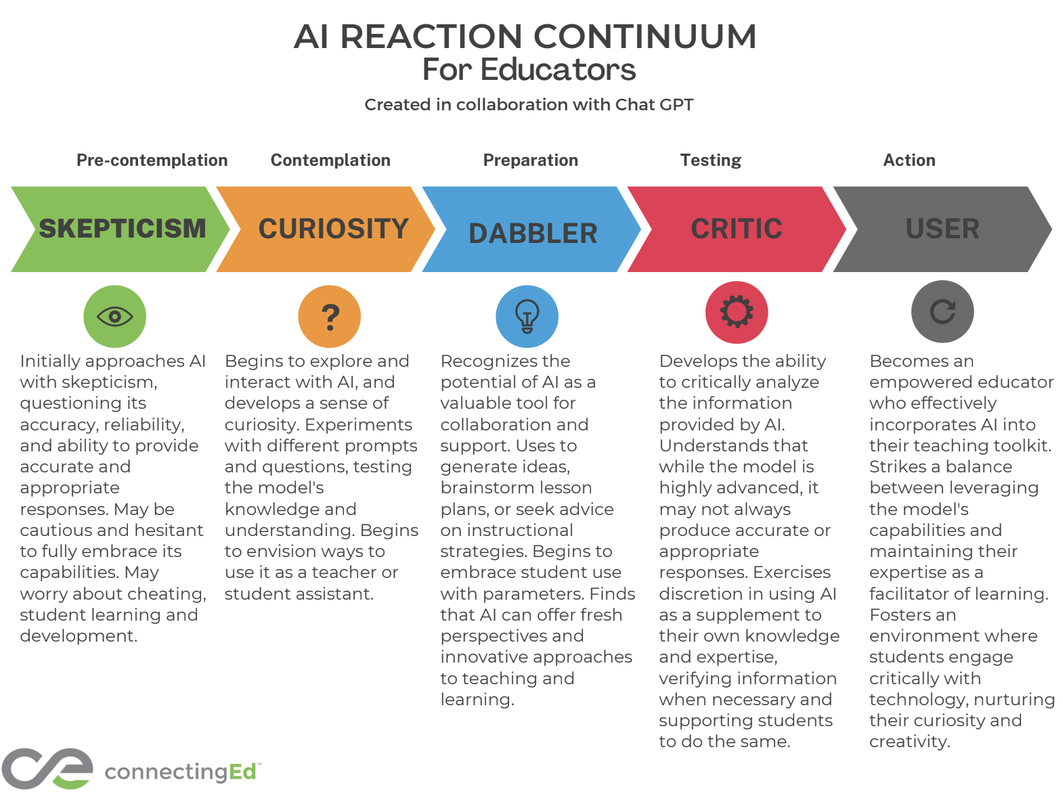
Use the continuum as a springboard to collaborate with colleagues, share experiences, and contribute to the ongoing conversation about AI in education.
Actionable steps For Each Phase:- Skeptics- consider attending workshops or webinars to explore AI's potential benefits and address concerns.
- Curiosity Seekers- actively experiment with AI, trying different prompts and questions to understand its capabilities better.
- Dabblers- leverage AI for collaborative lesson planning and seek out specialized training to maximize its potential.
- Critics- focus on honing critical analysis skills and teaching students to do the same.
- Users- continue to strike a balance between AI and traditional methods, fostering an environment of critical engagement.
Encourage continuous learning and adaptation in the ever-evolving landscape of educational technology.
Add your reactions and ideas in the comments below!
Contact us for professional learning and support around AI!This resource of the month was made in collaboration with Chat GPT -
- Published on
https://americasucceeds.org/policy-priorities/durable-skills
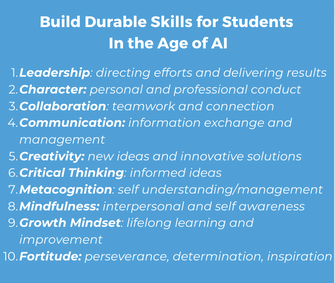
As technology continues to shift and new tools are available to support us as educators create more meaningful and personalized learning experiences for students we need to begin to think about the importance of developing durable skills in our students (America Succeeds).
Let's be honest- none of us have had a course on how to develop these durable skills! (Yes, we need to fix that!)Let's start with Collaboration!
Here are 5 simple ways to add collaborative experiences into your classroom.- Group Projects and Activities:
- Assign group projects that require students to work together to achieve a common goal.
- Vary group compositions to provide students with the opportunity to collaborate with different peers.
- Clearly define individual roles within the group to ensure equal participation.
- Classroom Discussions and Debates:
- Facilitate class discussions on relevant topics, encouraging students to express their opinions and listen to others.
- Organize debates or structured dialogues where students must collaborate to present and defend different viewpoints.
- Establish guidelines for respectful communication to create a positive and inclusive environment.
- Collaborative Learning Spaces:
- Arrange the classroom seating to facilitate collaboration, such as clusters of desks or movable furniture.
- Designate specific areas for group work, equipped with whiteboards or collaboration tools.
- Rotate students through different collaborative spaces to promote interaction and teamwork.
- Peer Teaching and Tutoring:
- Implement peer teaching activities where students take turns teaching a concept or skill to their classmates.
- Pair stronger students with those who may need additional support, fostering a cooperative learning environment.
- Encourage students to seek help from their peers before asking the teacher, promoting a sense of community.
- Digital Collaboration Tools:
- Integrate technology tools that facilitate online collaboration, such as Google Docs, Microsoft Teams, or collaborative project management platforms.
- Assign tasks that require students to contribute and edit a shared document, encouraging real-time collaboration.
- Provide guidance on digital etiquette and effective online communication.
A few things to remember:- Assume students don't know how to collaborate. Take time to discuss what good collaboration looks like. Even make a list and revisit/ debrief after a collaborative experience to modify and reflect on lessons learned.
- Coach students and groups as they are collaborating. Notice effective collaboration and point it out. If you see an issue, stop and have a discussion with the group and empower them to problem solve.
- Be sure group expectations and task goals are clear to help keep groups on task.
Download the Durable Skills Framework Today!
americasucceeds.org/policy-priorities/durable-skills
If you have other ideas or try one of these, share your experience in the comments!!
-
- Published on
